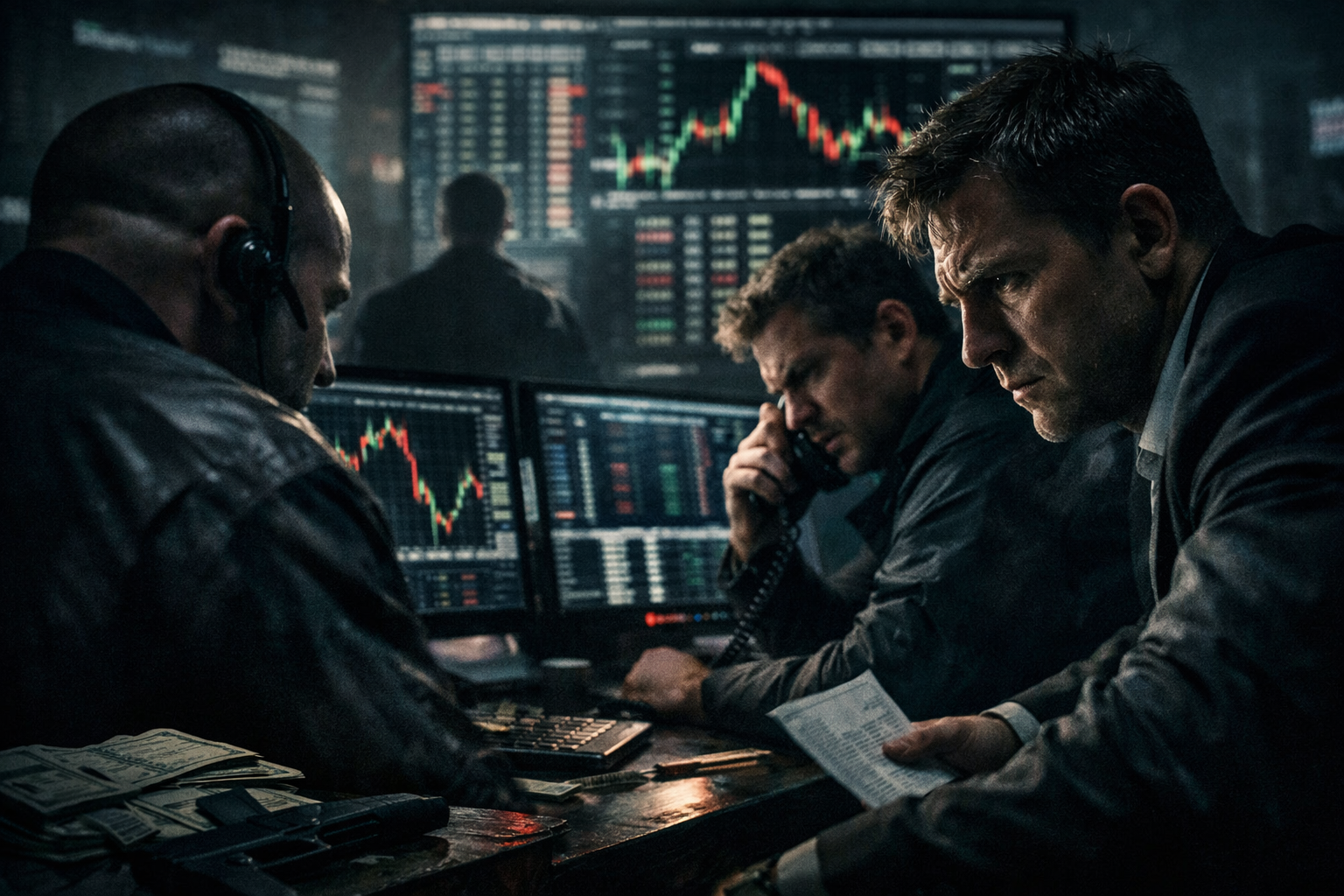
Discover what options traders do and how they leverage time and volatility for profit in the market.
An options trader is not a participant. An options trader is a market operator.
They do not wait for permission.
They do not wait for earnings.
They do not wait for consensus.
They weaponize time, volatility, and probability. They move first—and let the market explain itself later.
OPTIONS TRADER DEFINITION (noun) — DEFINED
op·tions trad·er
/ˈäpSHənz ˈtrādər/
A market operator who trades derivative contracts tied to price, time, and volatility rather than owning the underlying asset.
An options trader controls risk asymmetrically, exploits leverage intentionally, and profits from movement, not belief.
Unlike stock investors, an options trader does not need ownership.
- They need structure.
- They need timing.
- They need nerve.
This is not investing.
This is exposure engineering.
WHY OPTIONS TRADERS MATTER NOW
Options traders no longer sit on the sidelines. They sit behind the curtain.
According to the Options Clearing Corporation, total U.S. options volume exceeded 12.3 billion contracts in 2023, the highest in history.
On many trading days, options volume now rivals or exceeds stock volume, especially in major indexes.
Zero-day-to-expiration (0DTE) options now account for over 40% of S&P 500 options activity on active sessions, according to Cboe. That means massive leverage is being deployed intraday, then erased by the closing bell.
This is why markets feel faster.
Sharper. More violent.
Options traders didn’t break the market.
They adapted to it.
THE MECHANICS MOST PEOPLE NEVER SEE
When an options trader enters a position, market makers must hedge.
Those hedges require buying or selling the underlying asset.
That action moves price.
JPMorgan analysts have warned that options-driven dealer hedging can dominate short-term market direction, especially during low-liquidity periods.
This is known as gamma exposure—and it explains why price often moves without news.
This is not conspiracy.
It is plumbing.
PRICE VIOLENCE IS STRUCTURAL
Volatility spikes are not accidents.
They are forced reactions.
When options traders crowd one side of a trade:
- Dealers hedge aggressively
- Momentum feeds momentum
- Selloffs accelerate
- Rallies detach from fundamentals
This is how gamma squeezes form.
This is how markets snap back or collapse at expiration.
An options trader does not fear volatility.
They feed on it.
CASE STUDY: GAMESTOP (2021)
GameStop was not moved by stock buyers alone.
It was ignited by options traders.
Retail traders aggressively bought short-dated call options. Market makers, forced to hedge, bought shares.
As price rose, more hedging was required.
This feedback loop drove GameStop from under $20 to over $400 in weeks.
The SEC later acknowledged that options activity materially contributed to the price action.
- This was not rumor.
- This was documented.
Options traders didn’t watch history.
They pulled it forward.
THE MYTH OF THE “OPTIONS GAMBLER”
The market sells a lie.
It says options traders are reckless.
Emotional.
Uneducated.
Reality:
- Hedge funds use options for leverage
- Pension funds use options for protection
- Banks use options to reshape balance-sheet risk
Warren Buffett once called derivatives
“financial weapons of mass destruction.”
That was not fear.
That was respect.
OPTIONS TRADERS IN POP CULTURE
Hollywood knows this power.
- Wall Street: Money Never Sleeps (2010) — options and derivatives are portrayed as the hidden levers behind modern finance.
- The Big Short (2015) — while focused on swaps, the film exposes the same truth: derivatives decide outcomes long before headlines catch up.
- Margin Call (2011) — captures the overnight terror of leverage, risk models, and derivative exposure collapsing in real time.
Options traders are rarely the heroes.
They are the ones who knew first.
THE OPTIONS TRADER MINDSET
An options trader does not predict.
They calculate.
They ask:
- How far can price move?
- How fast can it move?
- What happens if I’m wrong?
Losses are planned.
Risk is capped.
Emotion is excluded.
This is not optimism.
This is control.
THE BOTTOM LINE
An options trader is not an investor.
Not a gambler.
Not a spectator.
They are a volatility tactician operating beneath the surface of modern markets.
They don’t need belief.
They don’t need loyalty.
- They need structure.
- They need timing.
- They need the courage to act before certainty arrives.
Ignore options traders, and the market looks random. Understand them, and the chaos becomes legible. This is where modern markets are decided.